Robert Aickman

Recently, I strolled through Robert Aickman’s short story collection The Wine-Dark Sea. I had been wanting to read some of his stories and picked this one because it was available from the library.

The book is made up of stories pulled from other collections. Other than a story (“The Hospice”) that I had read in an anthology (Masterpieces of Terror and the Supernatural, A Treasury of Spellbinding Tales Old & New, Selected by Marin Kaye), the collection was my first exposure to Aickman’s writing. It’s rare, at such an advanced and jaded age, to fall in love with a new-to-me writer.

Paul Charles Smith has a discussion of the title story here, which he posted, coincidentally, around the time I finished reading the story. He mentions how different the mood is compared to other Aickman stories. At the time I read Smith’s post, I hadn’t read enough Aickman to understand what Smith was talking about. Aickman stories show the strange in the everyday. They build at a pace that some might call slow. They bubble with unease and a feeling that uncanny or uncomfortable things exist just out of our sight. He used allusion (what some might call vagueness), grounding characters and setting while placing bits of strange, a grain here and there, grains that accumulate past the end. Grains that linger.

The Wine-Dark Sea is an excellent introduction to his work, and is available in paperback from Faber Finds, along with another reprint collection (The Unsettled Dust) and an original collection (Cold Hand In Mine). Tartarus Press has reprinted several of his collections, in attractive but expensive hardbacks (though less expensive than used copies of the original editions). I’m looking forward to reading them all.

Tulsa

My 3 1/2-year-old daughter recently injured her hand, requiring reconstructive surgery and an ongoing recuperation period. One of the therapies we’ve tried (her choice) is listening to Western Swing music on CD and watching YouTube videos of Bob Wills, Don Walser, and Hot Club of Cowtown.

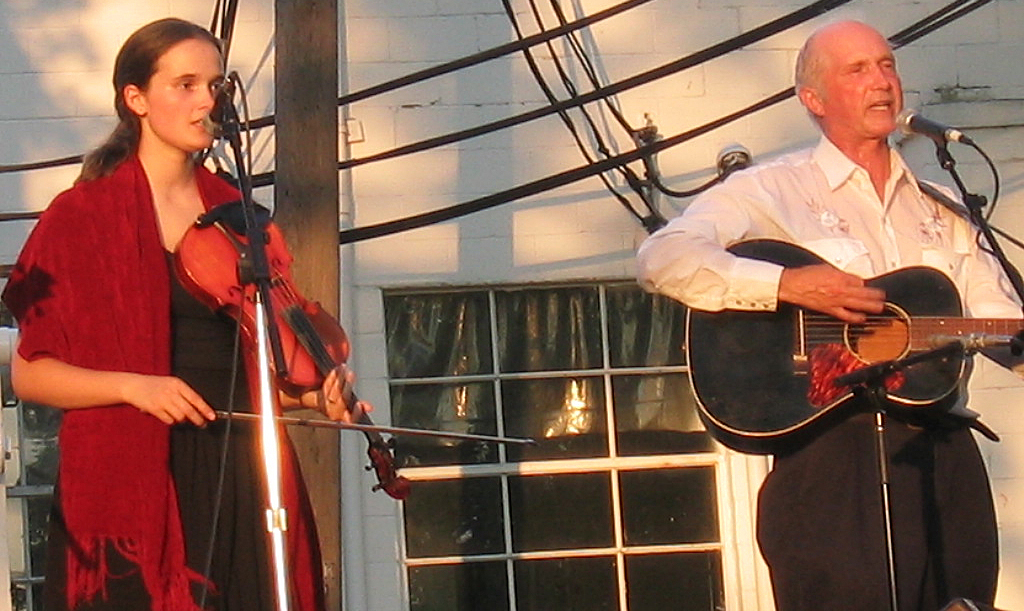
We’ve always listened to music during the bedtime process, an evolving playlist of non-children’s music, usually albums with songs that I can sing to. These have included Don Walser’s albums, The Archive Series (Vols. 1&2). Walser was an old-time Texas country singer who died in 2006. I used to go hear him play a lot during my last couple of years in Austin, and once at the Mercury Lounge when I was living in New York. Walser mixed originals and covers, including some Bob Wills songs. At first, I would put a CD on at the beginning, but as my daughter got older, she started asking for specific songs on each CD.

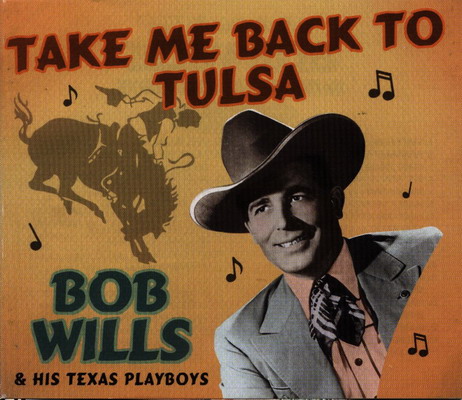
I still don’t know what makes her pick up a particular song, things like Alejandro Escovedo’s cover of the Rolling Stones “Sway” from his More Miles Than Money album, Jimmie Dale Gilmore’s “Santa Fe Thief” (she liked the line “Look over yonder”) And Don Walser’s version of Bob Wills’ “Take Me Back To Tulsa”. Which led to my explaining that people do other people’s songs. I found a YouTube video of Bob Wills and the Texas Playboys doing the song (with Luke Wills singing). Which also led to a weirdly sped-up video of Hot Club of Cowtown doing it, and then videos of Hot Club of Cowtown doing “Big Ball in Cowtown” (also covered by Don Walser), and videos of Don Walser doing some of his originals (mainly “The John Deere Tractor Song”).

Continue reading “Tulsa”

How to Write a Novel

Chico Marx (Fiorello) from the Marx Brothers A Night at the Opera:

So now I tell you how we fly to America. The first time we started we got-a half way there when we run out a gasoline, and we gotta go back. Then I take-a twice as much gasoline. This time we’re just about to land, maybe three feet, when what do you think: we run out of gasoline again. And-a back-a we go again to get-a more gas. This time I take-a plenty gas. Well, we get-a half way over, when what do you think happens: we forgot-a the airplane. So, we gotta sit down and we talk it over. Then I get-a the great idea. We no take-a gasoline, we no take-a the airplane. We take steamship, and that friends, is how we fly across the ocean.

New York, Emshwiller, Etc.

I’m back home after a short trip to New York for the Carol Emshwiller 90th birthday reading party event. Jim Freund, who runs the New York Review of Science Fiction reading series and hosts the Hour of the Wolf show on WBAI asked me to interview Carol as part of the event. Which sounded like a good idea at the time…

His plan was to start out the evening by reading a section from Ursula Le Guin’s introduction to the War side of Carol’s forthcoming PS collection, then have Carol read the beginning of a story, with Jim continuing it, and Carol reading the last section. Because of her eye problems, she didn’t think she could read all of it. At first, she didn’t think she could read anything. She was shaky at the start, but did great with the end.

After the reading, we went right into the interview. I’ve never done anything like that and I’m not sure I want to again. Part of the problem (aside from my inexperience) is that Carol and I spent about an hour and a half at her apartment talking about what we would talk about, and by interview time I felt like we had said everything. I wish we had recorded our conversation. So I asked a few questions, Carol talked, and long before I should have been finished, I had nothing else to say. Jim (the experienced radio host) took over, and audience members asked questions (which had been our plan, only not so soon). And it ended (as everything does). Unfortunately, it was videotaped, and recorded for radio. I don’t want to watch.

But still, it was a fun night. It was great to see all the support and admiration for Carol. For her life and writing—not just for making it to 90.

April is Emshwiller Month

I’m heading to New York next week for part one of the Carol Emshwiller birthday events.

Tuesday, April 12, The New York Review of Science Fiction Readings

The SoHo Gallery for Digital Art
138 Sullivan Street
Doors open at 6:30 PM
Program begins at 7:00
Admission Free
$7 donation suggested

There’s a second event the following Monday, but I’ll be back home.

Monday, April 18, the Wold Newton Reading Series will offer an interview of Carol Emshwiller by Matthew Cheney. There will also be magic Magic Brian.

Details: April 18, 2011, 7.30pm/WORD Bookstore in Greenpoint, Brooklyn/126 Franklin Street, Brooklyn, NY 11222

And, there’s a web compendium for information and Emshwiller tributes here.

More on Jack Hardy, and Journalistic Preconceptions

There was a nice piece at the New York Times online about some people getting together for a Monday night songwriter’s meeting/farewell to Jack.

The write-up had a link to a 1999 NYT article on the meetings.

I had forgotten about the article. It wasn’t a bad piece, but the reporter was stuck on the idea of having to give everyone’s age and occupation. I thought that was odd and unimportant. What was important was the reason for being there, art and song.

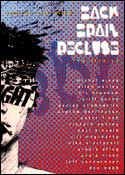
And, not that you can tell from the article, I was there. It happened to be the one time during that period when I tried to write a song. I wrote some lyrics and sent them to Mike Laureanno, who worked on them and came up with a melody. I also happened to have brought a copy of Back Brain Recluse, which had recently accepted my story, “Tales of the Golden Legend” (as I’ve said elsewhere, the story never came out in the magazine, but appeared later in The Third Alternative; the issue of Back Brain Recluse that I had there turned out to be the last). It was a funky magazine, with lots of art, and stories laid out in sometimes hard-to-read ways. Having the magazine, being a fiction writer at a songwriter’s meeting, illustrated Jack’s desire to include everyone, his love of interdisciplinary aesthetics.

But here’s what the reporter said: “Michael Laureanno, 38, an electrical engineer who drove nearly four hours from Wakefield, R.I., tried out a tune he co-wrote, via E-mail, with a friend from western Massachusetts.”

I’m not trying to be petty about my name being omitted. It’s the bad journalism that bothers me. I have a journalism degree so I know some things. What I think happened is that the reporter had already decided what the article was about, and my existence didn’t fit. The story would have been a better if he had written about what was there.

Somewhat connected bit. Here’s an excerpt from a Suzanne Vega documentary, showing one of the songwriter meetings in Jack’s apartment. Funny New York bit at the beginning–she’s riding in the back of a cab, looking at the camera and talking, the driver turns down the wrong street.

Jack Hardy, Gone

Jack Hardy and daughter Morgan, July 2006

Friday (March 11) for naptime, Merida, my three-year-old, wanted to listen to “Willie Goggin’s Hat” from Jack Hardy’s CD The Passing. As usual, she asked if he would sing it when he comes to visit. She also wanted him to do her other favorites, “Sile Na Cioch (Sheila),” “The Boney Bailiff,” “May Day,” “Blackberry Pie.” She says that about Ringo Starr and “Yellow Submarine” too, but with Jack it’s different. She’s seen the pictures of him at Rebecca and my wedding. She knows he’s been in our house.

Once she was asleep, I went to my computer. I looked at Facebook, which I hadn’t done in a couple of days. Someone had tagged Jack in a photo. I clicked on it, and was about to close the window when I saw that whoever had posted it had put dates, 1947-2011. I thought that was an odd way to date a photo. I looked at it again. Maybe it had Friday’s date—I can’t remember…I was starting to realize…I literally felt a clenching in my stomach. (This is one of the feelings that is difficult to convey in fiction without drifting into cliché.) But I felt it. I went to his Facebook page and saw the posts.

Continue reading “Jack Hardy, Gone”