Songs, Reviewers, Children, and The Ephemera on ebook

Lately, my four-year-old daughter has been wanting to listen to the title song of the Mekons Ancient and Modern album. Yes, I know that in some states it’s a crime to let a child listen to real music.

Ancient and Modern coverThe song (in case anyone out there doesn’t know) is an epic tale in four sections, with four different singers (technically, many more than four singers because the fourth section is sung by a choral group.  “Ancient and Modern” is a song that does what a good work of art is supposed to do, slide past the thinking-brain and into the subconscious.

It would be nice to know who the voices are (as a parent, I’m supposed to know everything, and having to tell a four-year-old “I think that’s X…” is most embarrassing. But the band’s liner notes aren’t very revealing. The first vocal is, I think, accordion player Rico Bell. I’m less sure of his voice because he doesn’t sing as much as the other members. Next is a spoken part by either violin player Susie Honeyman or bass player Sarah Corina—it’s definitely not Sally Timms. I’ve never heard either of them speak and can’t place the accent. Honeyman is from Glasgow, but the accent doesn’t sound like Glaswegians I know, mainly writer-friend Neil Williamson. The third part is easy, founding-member Tom Greenhalgh. The song ends with vocals by the Burlington Welsh Male Chorus—also obvious, because they’re credited [updated below].

A note on the arrogance of reviewers. Here someone says “The song begins with Jon Langford….” and here: “The three vocalists—Jon Langford, Tom Greenhalgh and Timms”. I also found a reviewer who said the song faltered toward the end, but at least he didn’t add to his lack of taste by attempting to identify the singers. Were these people really so certain? Or is it because they know that the main singers are two men and a woman, so any men and women have to be from among those three? They could spend a little more time listening before they begin the pontification process.

And in closing, having mentioned Glaswegian Neil Williamson, I’d like to tell people about the ebook version of his very fine but out of print debut short story collection, The Ephemera, now available in the various ebook formats from infinityplus.The ebook edition has four additional stories plus notes on all the stories. I recommend that those of you who posses the modern ink-substitute called an e-reader get yourselves a copy.

[Update]

From a source involved with the proceedings: Lu Edmonds starts, then Jon Langford and Rico Bell join in, Susie Honeyman talks, Tom Greenhalgh sings, Sarah Corina talks, Tom Greenhalgh sings again, then everyone and the choir finish. Reviewers: see, it’s not hard to find things out!

Bill Morrissey

I just heard today that singer/songwriter Bill Morrissey died in July, of heart failure. Various obituaries and tributes here. I talked to him once at one of his shows and we shared a French publisher, but I didn’t know him.
As I type, I’m listening to his 1989 album, Standing Eight. Which, if Amazon is correct, is out of print.

The first album I heard, after catching him live in Austin in ’93 or ’94, was Night Train, which has “Birches,” probably his best-known song. It’s a song that struck me a perfect short-short story, set to music. So I wasn’t surprised when he wrote a novel, Edson, which came out in ’96. I had some problems with it (mostly repetition that should have been edited out), but it had some impressive story-telling and characterization. He wrote a second novel that never came out in the U.S. It was to have appeared in France this year, but the publisher went bankrupt (soon after their edition of The Painting and the City came out—sorry Bill, if it’s my fault).

A couple of years ago, I read on his website that he had been dealing with alcoholism and depression. Depression that he had self-medicated for years with the alcohol. Which happens. I wish it hadn’t. He might still be here.

Tulsa

My 3 1/2-year-old daughter recently injured her hand, requiring reconstructive surgery and an ongoing recuperation period. One of the therapies we’ve tried (her choice) is listening to Western Swing music on CD and watching YouTube videos of Bob Wills, Don Walser, and Hot Club of Cowtown.

We’ve always listened to music during the bedtime process, an evolving playlist of non-children’s music, usually albums with songs that I can sing to. These have included Don Walser’s albums, The Archive Series (Vols. 1&2). Walser was an old-time Texas country singer who died in 2006. I used to go hear him play a lot during my last couple of years in Austin, and once at the Mercury Lounge when I was living in New York. Walser mixed originals and covers, including some Bob Wills songs. At first, I would put a CD on at the beginning, but as my daughter got older, she started asking for specific songs on each CD.

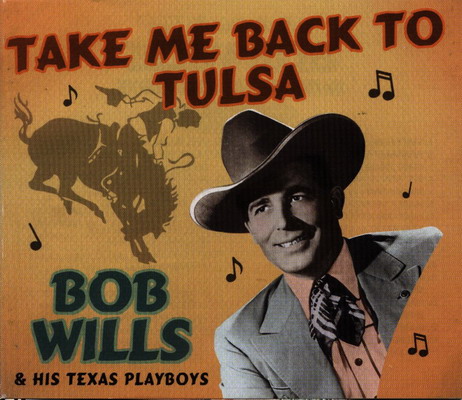
I still don’t know what makes her pick up a particular song, things like Alejandro Escovedo’s cover of the Rolling Stones “Sway” from his More Miles Than Money album, Jimmie Dale Gilmore’s “Santa Fe Thief” (she liked the line “Look over yonder”) And Don Walser’s version of Bob Wills’ “Take Me Back To Tulsa”. Which led to my explaining that people do other people’s songs. I found a YouTube video of Bob Wills and the Texas Playboys doing the song (with Luke Wills singing). Which also led to a weirdly sped-up video of Hot Club of Cowtown doing it, and then videos of Hot Club of Cowtown doing “Big Ball in Cowtown” (also covered by Don Walser), and videos of Don Walser doing some of his originals (mainly “The John Deere Tractor Song”).

Continue reading “Tulsa”

More on Jack Hardy, and Journalistic Preconceptions

There was a nice piece at the New York Times online about some people getting together for a Monday night songwriter’s meeting/farewell to Jack.

The write-up had a link to a 1999 NYT article on the meetings.

I had forgotten about the article. It wasn’t a bad piece, but the reporter was stuck on the idea of having to give everyone’s age and occupation. I thought that was odd and unimportant. What was important was the reason for being there, art and song.

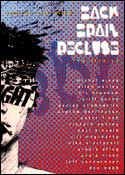
And, not that you can tell from the article, I was there. It happened to be the one time during that period when I tried to write a song. I wrote some lyrics and sent them to Mike Laureanno, who worked on them and came up with a melody. I also happened to have brought a copy of Back Brain Recluse, which had recently accepted my story, “Tales of the Golden Legend” (as I’ve said elsewhere, the story never came out in the magazine, but appeared later in The Third Alternative; the issue of Back Brain Recluse that I had there turned out to be the last). It was a funky magazine, with lots of art, and stories laid out in sometimes hard-to-read ways. Having the magazine, being a fiction writer at a songwriter’s meeting, illustrated Jack’s desire to include everyone, his love of interdisciplinary aesthetics.

But here’s what the reporter said: “Michael Laureanno, 38, an electrical engineer who drove nearly four hours from Wakefield, R.I., tried out a tune he co-wrote, via E-mail, with a friend from western Massachusetts.”

I’m not trying to be petty about my name being omitted. It’s the bad journalism that bothers me. I have a journalism degree so I know some things. What I think happened is that the reporter had already decided what the article was about, and my existence didn’t fit. The story would have been a better if he had written about what was there.

Somewhat connected bit. Here’s an excerpt from a Suzanne Vega documentary, showing one of the songwriter meetings in Jack’s apartment. Funny New York bit at the beginning–she’s riding in the back of a cab, looking at the camera and talking, the driver turns down the wrong street.

Jack Hardy, Gone

Jack Hardy and daughter Morgan, July 2006

Friday (March 11) for naptime, Merida, my three-year-old, wanted to listen to “Willie Goggin’s Hat” from Jack Hardy’s CD The Passing. As usual, she asked if he would sing it when he comes to visit. She also wanted him to do her other favorites, “Sile Na Cioch (Sheila),” “The Boney Bailiff,” “May Day,” “Blackberry Pie.” She says that about Ringo Starr and “Yellow Submarine” too, but with Jack it’s different. She’s seen the pictures of him at Rebecca and my wedding. She knows he’s been in our house.

Once she was asleep, I went to my computer. I looked at Facebook, which I hadn’t done in a couple of days. Someone had tagged Jack in a photo. I clicked on it, and was about to close the window when I saw that whoever had posted it had put dates, 1947-2011. I thought that was an odd way to date a photo. I looked at it again. Maybe it had Friday’s date—I can’t remember…I was starting to realize…I literally felt a clenching in my stomach. (This is one of the feelings that is difficult to convey in fiction without drifting into cliché.) But I felt it. I went to his Facebook page and saw the posts.

Continue reading “Jack Hardy, Gone”

Stark Folk Interview

It’s time for another installment in the Laconic Writer Central (LWC) sporadic interview series, this time with Brady Burkett of the Stark Folk BandStark Folk’s second album Well Oiled came out this month, following the self-title debut from 2008.  Both are available on cd and vinyl from Old3C Records and digitally on iTunes. The band is a collaboration between Burkett and Ryan Shaffer, plus other musicians to fill out the sound.

LWC: Let’s start with some history. When did you and Ryan start working together?

BB: Ryan is from the same hometown as I am. Brookville, Ohio. We vaguely knew each other, like people do in small towns, but we didn’t really connect until I was riding in the back seat of his black, tinted-window Z-24, talking about getting a band together as well as the debauchery we were looking forward to getting into that night. At the time I wasn’t even living in Columbus. I think Ryan was on break from his freshman year at Ohio State.

Also, I didn’t own a guitar or any other instrument. But, I knew I wanted to be in a band, make music, and create something, anything. I figured Ryan did too because he seemed really into the idea of creating art and all that. We were young and full of energy around it, so when I moved to Columbus during the late summer of ’96 it was on!

LWC: Stark Folk grew out these collaborations. What were the early incarnations like?

BB: Yeah, Stark Folk grew out of the A Landscape Yesterday project, starting from the first moment I picked up a guitar, learned a few chords, tried writing songs and recording. We had an actual four-piece band at one point, but it never really came together.

We got together in 2000–2001 to mix several tapes of recordings, the first one dating back actually to 1995 before I lived in Columbus. We used the fancy equipment in the basement of the Ohio Capital Building (Ryan had an internship there) to expedite the long process of getting the recordings CD-ready. They eventually became the A Landscape Yesterday: For Seasons 1996-2001 collection, which is available upon request. There are about 40 or so songs there.

There were also various other projects that we both were involved with from time to time in Columbus. Ryan once banged around in a band called The Dirty Tricks and I played animal drums in a wild upbeat three-piece called Liu Mang. All of it has informed where we are now, which for once really makes sense to me.

Continue reading “Stark Folk Interview”