Realms of Fantasy review

From Paul Witcover’s review of Psychological Methods To Sell Should Be Destroyed in Realms of Fantasy.

Wexler “builds his stories around flesh-and-blood people, human beings who, amid their bizarre surroundings and off-kilter circumstances, engage our feelings as well as our intellects….These are not stories of grand awakenings but of small epiphanies.  They are as much about disenchantment as they are about enchantment.  And they are funnier than you might think, especially “Tales of the Golden Legend,” which features such sage advice as “We can’t always do what bread says.”  How true!”

Indifference

I was reading Harlan Ellison’s collection, I Have No Mouth And I Must Scream, and, when I reached the beginning of “Lonely Ache” and read the first sentence: “The Form of the Habit she had become still drove him to one side of the bed.” the idea of “Indifference” flowed into my head. I put the book down, went to my desk, and started writing.

“Indifference” references an unpleasant period of my life that had occurred a few months earlier. A relationship had ended (badly, of course); and assorted feelings combined with physical displacement (a move from Manhattan to Western Massachusetts) manifested into the story. The character Brown’s helplessness echoed what I had felt. Brown’s puzzlement over the coriander came from my own experience. But the head…like the solidified clouds in “Valley of the Falling Clouds,” the head appeared to me fully-formed, from whatever neighborhood of the subconscious holds such things.

I moved from Austin, Texas to New York City in January 1995; that winter was relatively mild, but the next year there was a major snowstorm that shut down the city for a day. I didn’t have to go to work, and went out walking. I needed to mail a package (probably a short story submission), and walked nine blocks to the post office on Canal Street, which turned out to be closed. It was eerie seeing the city so calm and white and still. In a nod to another of my stories, when Brown goes out into the snow-drenched streets, he witnesses the scene at the end of “Suspension.”

The story was published in the debut issue of a ’zine called Full Unit Hookup.

Food Memory

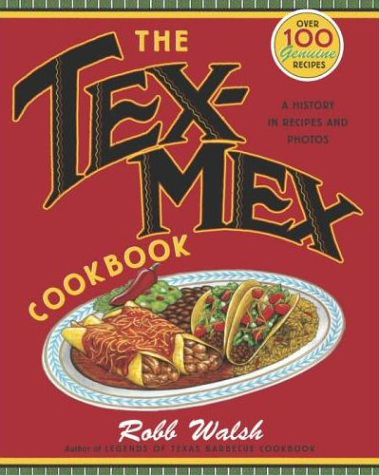
tex-mexI’ve been read-skimming The Tex-Mex Cookbook by Robb Walsh, an excellent compendium of recipes, history, anecdotes about one of my favorite things: food. And Tex-Mex food in particular, something I grew up with in Houston, TX and wish southwest Ohio had more of.

I was reading the section on the Armadillo World Headquarters. The Armadillo, as it was called, was a music hall that closed New Year’s Day 1980, which was just after the first semester of my sophomore year at the University of Texas. I went to the Armadillo only three or four times.  Concerts I remember were Shake Russell/Dana Cooper, Saint Elmo’s Fire, and Head East. The Wikipedia entry has a list of some of the acts that played there,

Apparently it was also known for the food. Walsh relates an anecdote about how Van Morrison played three nights there and then went on, but after Jerry Garcia told him he shouldn’t have missed the shrimp enchiladas, his agent called to schedule another performance on a night that they were served. But what matters to me is this bit: “Big Rikki was known for her nachos, which were actually whole tostadas spread with refried beans, piled high with jalapenos, and loaded with melted cheese; they were three for a dollar.”

When I read that, I remembered them.  Remembered discovering them one of the times I was there, and ordering them each time I returned, sharing the pile with whoever I was with. I want them now, but I think my kitchen is too clean to reproduce the correct flavor.

The club closed after the landlord sold it so it could be torn down and replaced with an office building. A situation that formed another part of my education aside from college.

The Green Wall

I don’t remember where I got the image of a rain forest projected on wall. Or a portal to a rain forest appearing on a wall. Whichever it is depends on how you read tales of the fantastic. Part of what inspired “The Green Wall” was the short fiction of J.G. Ballard. I wanted to evoke some of his obsessional mystery, and his fiction is full of mirages and phantom images.

The wall was the wall outside my apartment window in New York (perhaps I was stuck for something to write, looked out the window, and said: what’s out there?—oh, a wall, maybe it has a rain forest on it). The Feast of San Gennaro takes place every autumn in Manhattan’s Little Italy and is little more than an excuse for fairground attractions, beer, and sausages. It isn’t much fun to experience as a resident of the neighborhood.

The art gallery in the story is based on a real place which no longer exists and shall remain unidentified, but I think anyone familiar with the New York art world knows a Hannah Rezinsky. Publishers are kittens compared to gallery owners. I’m glad I never worked for her nor was one of her artists, but I liked her just fine.

I hadn’t planned this when I wrote the story, but when I began working on my new novel, The Painting and the City, my idea for the sculptures of the main character, Jacob Lerner, matched the sculptures I described in “The Green Wall.” Because “The Green Wall” had not yet been published, I added something about Jacob Lerner to it, and incorporated the gallery owner into the novel (which takes place some years after Lerner has moved on to much more stable representation).

This story first appeared in Polyphony 5.

The New Offbeat

Here’s a snippet of a brief review by Rich Horton from the February Locus of Psychological Methods To Sell Should Be Destroyed.

“Other delvings into the small press turn up such treasures as Robert Freeman Wexler’s brief collection…half a dozen offbeat stories, notably the book’s one original, “The Sidewalk Factory: A Municipal Romance.”

Horton’s column also included the latest Lady Churchill’s Rosebud Wristlet, which he says is “as ever, packed with original and offbeat stories.  My story, “Suspension,” appeared in a past issue of Lady Churchill‘s, and is in the collection, making it no doubt doubly offbeat.

My handy electronic dictionary defines offbeat as:

offbeat |ˈôfˌbēt; ˈäf-|

adjective

1 Music not coinciding with the beat.

2 unconventional; unusual : she’s a little offbeat but she’s a wonderful actress.noun Musicany of the normally unaccented beats in a bar.

There are a lot of labels and movements out there: magical realism, slipstream, interstitial, new weird, steampunk, etc., but  I don’t know if I’m part of any of them. My stories have not appeared in their definitive anthologies. So I must be something else. I’m relieved to see a new one that I can claim.  But am I Offbeat?  Or New Offbeat?  Has there been an Offbeat?  Or an Onbeat? There were Beats, of course.

The next step is an Offbeat Manifesto, and a roster of fellow Offbeats, along with Proto-Offbeats (without which any movement is derailed before it starts).

Valley of the Falling Clouds

Continuing with story note posts, here’s one for “Valley of the Falling Clouds.”
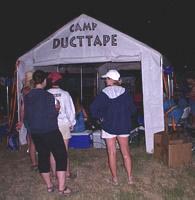
campducttapeIn June, 1996, I went to the Kerrville Folk Festival, a yearly music event held on a ranch outside Kerrville, Texas, in the Texas Hill Country, a land of cedar, prickly-pear cactus, and heat.  The festival has been going on since 1972. It lasts three weeks, with crowded outdoor concerts on weekends and smaller concerts during the week. Some people go just for the weekend concerts, some stay a few days, and others camp out for the entire festival. There’s a tradition of elaborate campsites that groups set up in the same place each year.

Someone has a page devoted to it here.

A lot of musicians who aren’t official performers go to play their songs in the campgrounds and hang out with friends. It’s like a science fiction convention but without the boring panels and pontification; also without a bar, but there’s no lack of drink.

I was sitting outside my tent, under a tarp, temperature at least 96 degrees, and I had an image of solidified clouds rolling down a hill and crushing someone’s house.

A story unfolded about Rex, his longing for Apple Jane the herbalist’s daughter, and his departure to the wilds beyond the town of Moonsocket, where he built a shack. A shack he hoped to share with Apple Jane.

For a long time I tried to have the story start with the cloud boulders rolling down the hill and crushing Rex’s shack, and then jump back and forth in time. Jumbled mess. It was one of the stories I submitted to Clarion West. The fifth week, tired, not getting anywhere with a new story, I revised it, re-arranging it in chronological order. Based on feedback, I took out assorted things. A few years later, unable to find a publisher and more confident about what belongs in a story I write (what makes a story my story and not someone else’s), I put everything back.

Maybe because of its origins at a music festival the story has various song references woven into it, “wind’s dominion” from a Butch Hancock song, the name Rex and “blue wind” from Townes Van Zandt’s “Rex’s Blues”.

Another inspiration for “Clouds” was wanting to write something like Jack Cady’s story, “The Bride,” which I read in Century, a magazine that gave me hope that my style of fantasy could be published and appreciated by a genre audience. An older inspiration, which I didn’t connect until re-reading it last year, was Richard Brautigan’s In Watermelon Sugar, which I first read in my early twenties; its subtle tone and matter-of-fact description of the fantastic helped shape my writing style.

In Nick Gevers’ Locus Magazine review of Polyphony 3, where “Valley of the Falling Clouds” first appeared, he described the story as “pastoral surrealism,” which I liked quite a bit.

It used to end differently, but life changes made that ending impossible.
Tales of the Golden Legend (the bread story)

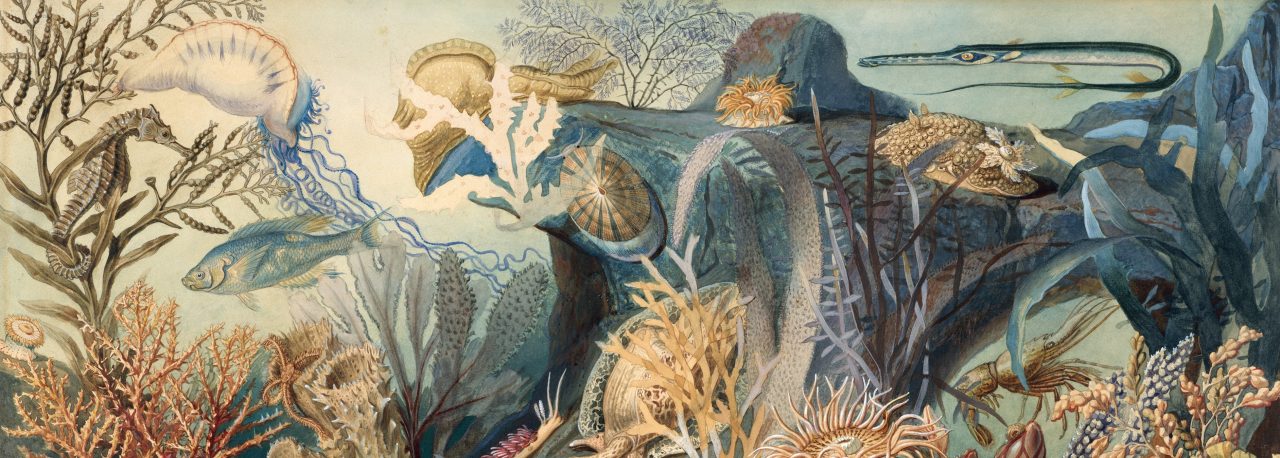
The title for “Tales of the Golden Legend” comes from a Rene Magritte painting of loaves hovering outside a window. There was a major retrospective at the Menil Collection in Houston in 1992, and I mined Magritte imagery for a number of stories (most of which were unpublishable messes). The painting’s title refers to a medieval book on saints, but I didn’t know that when I wrote the story.

Soon after I moved to New York City from Austin in early ’95, I took a writing class with Carol Emshwiller. I met Carol through mutual friends and had read some of her short stories. The class was for beginning writing—I wasn’t a beginner, or at lest was less a beginner than some, having taken creative writing classes in college and attended a summer workshop. But, I was a beginner compared to Carol (still am and always will be…). She gave the class several writing exercises, some of which became “Tales of the Golden Legend”. The story is in four parts: Prolog: Bread, The Bread Dialogs, The Sound of Crust, and Epilog: Bread Aria.

Prolog: Bread began as a study in objective viewpoint, hovering outside of the characters, observing, showing a character’s emotional state through description of their actions.

The Bread Dialogs came out of an exercise in writing dialog. I decided to create a person who could hear the speech of bread. The character observed in the prolog emerges with a life, job, and a new-found relationship with bread.

The Sound of Crust. We read a Grace Paley story called “Mother” that involved scenes in doorways, the idea was to tie a story to a particular object or place. I decided to continue with bread, using an oven as the object and place on which the story hung. It’s been described as bread porn.

Epilog: Bread Aria wasn’t part of an exercise, but I wrote it for the class. I wanted something to end the story-suite, hoping to make the collection of separate pieces work as a whole. I returned to the objective viewpoint of the prolog but, where the prolog was a camera that observed and listened to the people, this camera could also hear the bread.

The story sold twice, first to Back Brain Recluse, in fall 1998; I was paid for it, but the magazine folded before publishing the story. I then sent it to Andy Cox of The Third Alternative, who published it in 2002. It has received a lot of favorable attention, mostly from other writers. However, one reviewer of the Third Alternative issue had problems with it. He said he had to force himself to keep from laughing while he read it. Someone else posted on a writer’s message board that the story made him cancel his subscription.

Thus ended my bread-in-fiction phase, although I have a fragment of a story called “The Baker” that I may finish someday.

Manhattan Green

25manhattanenlarge

A friend of mine sent me a link to this picture of Manhattan half urban/half made over into its natural state.

It came from a New York Times article here.

The article references the Mannahata Project, which is also the source of the photo. According to the website: “The aim of the Mannahatta Project is to reconstruct the ecology of Manhattan when Henry Hudson first sailed by in 1609 and compare it to what we know of the island today.”

There’s a book coming out in May called Mannahatta: A Natural History of New York City and an exhibit at the Museum of the City of New York. The Mannahatta website talks about some neat stuff, like an interactive map that allows you to overlay the contemporary street grid on the 1609 landscape.

I stumbled on the Mannahatta site at some point during my research for The Painting and the City, but at the time, the site didn’t have much on it and I forgot about it.

In my novel, there are many references to Manhattan Island’s past topography, streams, hills, the Collect Pond. The sculptor-main character becomes fixated on the idea of Manhattan Green and creates a diorama combining an urban downtown that ends at the Dutch wall that is now Wall Street and a green and natural landscape above the wall. I also have a situation in which art can be used to affect what it depicts, if the necessary complex magical elements are used. So for the cover art, I was interested in showing the city being broken, with a landscape emerging in places.

Continue reading “Manhattan Green”

Suspension

I’m home, snowed in, and posting a note for “Suspension,” the first story in my chapbook collection, Psychological Methods To Sell Should Be Destroyed

In 1997 I attended Clarion West, an intensive, six-week writing workshop in Seattle, for science fiction/fantasy/horror writers-and also for people like me, who aren’t exactly sf/fantasy/horror but aren’t realism either. Each week the workshop has a different writer or editor leading it, and the stories are critiqued by the other participants and that week’s leader.

The workshop was important both for my writing and because of the many friendships I made, with my fellow participants, instructors, the workshop organizers, Seattle-based writers who helped out at the workshop, etc. Clarion has the reputation of starting careers, starting marriages, ending marriages, and many participants give up writing after they leave the workshop.  I didn’t have a problem keeping at my writing.  But my Clarion experience did make me doubt whether I had any place in a genre best-known for elves and spaceships, neither of which I have an interest in writing about. At that time, no one in the genre was talking about slipstream, interstitial, new weird, or any other blend, and the literary journals weren’t interested in stories that had surreal/unreal elements unless they were translated from Spanish.

One instructor said it was too bad I wasn’t alive in the 19th century because I might have found a better reception then. Another suggested that I attend Borges lectures in New York (where I was living at the time) to see if I could meet publishers there. But I also had instructors like Nicola Griffith, Lucius Shepard, and Michael Bishop, who were great teachers and encouraged me to keep going.

“Suspension” was the first story I wrote at Clarion.

I had been thinking for a long time about a story based on the four-armed man in René Magritte’s painting The Sorcerer (shown here as a mouse pad!). Also, I had been reading some of Samuel Beckett’s prose and went to several Beckett plays; his work is filled with sedentary characters: people trapped in bed, in piles of sand… One day I was walking east on Grand Street, Lower Manhattan; up ahead was a very large woman. Seeing her, I wondered what would happen if she slipped and fell. How difficult would it be to lift her? That thought led to the man in the snow, which then combined with the Magritte painting, giving us a giant, four-armed man in the snow. I named him Quatrain Brauner (Quatrain for his four arms and Brauner for surrealist Victor Brauner).

The initial draft was third person and had some throwaway humor that didn’t need to be there. The original title was “The Sorcerer”, because of the Magritte painting, which caused unintended expectations—I hadn’t considered that the participants in a fantasy and science fiction workshop would automatically think there would be magic when they saw the title.

In revision, after Clarion, I changed it to first person, and to help me with his snow-bound philosophizing, I read some Frederich Nietzsche. I’ve forgotten what exactly I got from the Nietzsche or even what book it was. There are times (too few) when I find the perfect things to be reading while writing or revising something—I rarely take something specific from what I’m reading, but some thought or feeling or concept gets incorporated into sentence structure or becomes an image or scene. I wish this happened more often, but it’s impossible to know ahead of time what will be the perfect thing to read.

“Suspension” first appeared in the very excellent ’zine Lady Churchill’s Rosebud Wristlet.

Best of 2008

Jason Pettus of the intriguing website the Chicago Center for Literature and Photography (CCLP) has picked my collection Psychological Methods to Sell Must Be Destroyed for his list of best experimental books of 2008. There are some interesting-looking books mentioned, and I’m pretty happy about showing up on a list with M.John Harrison.

I first came across CCLP after I read Jack O’Connell’s The Resurrectionist, a book that had some fine writing but ultimately disappointed me. I was curious what people were saying about it and looked at reviews on Goodreads.com.  Jason Pettus’s review echoes some of the problems I had with the book, and so I clicked on the link to his website, where the review had originally appeared. I looked around the site briefly, planning to return when I had more time. Some weeks later I was looking at a post–on a blog, but I don’t remember which blog—about writer’s problems with reviewers. I clicked on a link to David Louis Edelman’s blog post on standards that a review should follow. The post ended with mentions of some reviews of his novel that reflected these standards, one of which was from CCLP.

After reading Edelman’s post I went back to CCLP, looked around some more, and queried about sending a review copy of Psychological Methods to Sell Must Be Destroyed, and was pleased with the ensuing thoughtful and intelligent, review.

Besides book reviews, CCLP collects interesting photographs from various sources (for example here), and also links to news reports, etc., with commentary.

I don’t have a lot of time for reading blogs (or writing one), but CCLP is one I try to visit often.