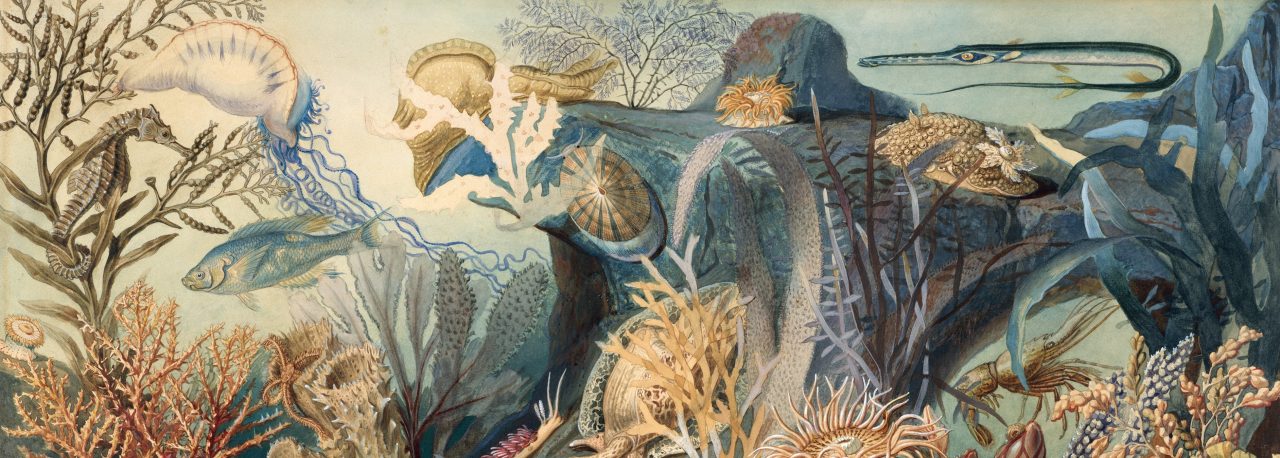
 Cool image from an 1889 book on railroads and harbors that I found while researching stuff.
Category: Writing
Springdale Longitude and Latitude
Today I finished the first draft of an afterword for the ebook version of In Springdale Town. Very interesting to look back on the events that led to my writing the story. I might post it here later on, but until then you’ll have to buy the ebook to find out the story behind the story.
Victoria Book
During my current research I came across a reference to a book on the history of Victoria, TX that came out in 1883 and was reprinted in 1961 (as History of Victoria County;: A republishing of the book known as V. Rose’s History of Victoria). I requested the book through inter-library loan. The title page said that the reprint was edited by JW Petty and published by The Book Mart, Victoria, TX 1961. At the end of the editor’s preface there’s an inscription from him, to the Texas Tech library (which isn’t where the book came from).
When I saw the title page, I remembered… In his youth, my father frequented a used bookstore in Houston owned by a man named Joe Petty. They got to be friends. He still has many books from Petty’s store. Later on, Joe Petty moved the store to Victoria. Here’s a link to a story on him in the Victoria Advocate from 1956.
The book has been useful, with facts about Victoria, like the number of banks and various stores. Also the racial and social attitudes of the author, Victor Rose. Also, I like how my research/writing obsessions intersected with a bit of family history.
Beginnings, Again
I’ve written what might be the beginning of the Western. If not the beginning, a starting point (and it’s true, you do have to start somewhere). I have a long way to go with the research, and I’d rather be farther along with research before starting. Details are coalescing, year, setting, character…Texas Gulf Coast, 1888..but a lot to be determined. Like, most of it.
No title yet. Sometimes I have a title before I start, sometimes I can’t think of one at all. I might give this a one word, character’s last name title, like a Louis L’Amour Western. I just read his novel Matagorda, which was a lot like a lot of his books: Good Honest Man Gets The Job Done, with lots of repetition about how he came to Texas to be a partner on a cattle drive, not get involved in a feud, but, would you believe it—he got involved in the feud, and his fiancé came from Virginia to Indianola right before the hurricane destroyed the town, and somehow, she knew about the feud before she got there, but he hadn’t. Still, I’d love to be able to write about landscape the way he did.
First person or third? I started with third person, but I’ve been reading Dashiell Hammett’s Continental Op stories and like the style of having anonymous first person narrator (though that would interfere with the idea of a last-name title—or would it?).
Another Take On Fiction For The Brain
Over at Book View Cafe, Nancy Jane Moore has an interesting post on Annie Murphy Paul’s article and other related research by Keith Oatley and Raymond Mar.
As a book designer, I would be curious to see a study that looks at good writing with a good page design vs. good writing with a poor design, and bad writing with a good design vs. bad writing with a poor design. Yes, good writing is subjective. I would have to be in charge of making that distinction.
Reading Fiction Is Good For The Brain (and what’s good for the brain is good for the rest of your body)

It turns out that reading fiction is actually good for you. Not that I didn’t already believe that, but I’ve met plenty of people who don’t read fiction, because they say they only want to read real things. This piece by Annie Murphy Paul in the New York Times discusses some recent research into the imagery of fiction and its effect on the brain.
Paul quotes Dr. Keith Oatley, professor of cognitive psychology at the University of Toronto and a novelist (including The Case of Emily V, a mystery that involves Sigmund Freud and Sherlock Holmes). According to Oatley, fiction “is a particularly useful simulation because negotiating the social world effectively is extremely tricky, requiring us to weigh up myriad interacting instances of cause and effect. Just as computer simulations can help us get to grips with complex problems such as flying a plane or forecasting the weather, so novels, stories and dramas can help us understand the complexities of social life.”
Paul mentions Oatley and other authors of various studies. When I looked up Oatley I discovered that he has a book from August 2011 on the same subject: Such Stuff as Dreams: The Psychology of Fiction, which is described as exploring “how fiction works in the brains and imagination of both readers and writers.”
I find it odd that Paul’s piece failed to mention Oatley’s book. I don’t know what that omission means (most likely nothing), but it bugs me. It distracted me from the making of a simple blog post on an interesting subject, sending me off into myriad speculations, none of which are worth noting in this post.
Here’s a group blog that Oatley participates in: OnFiction: An Online Magazine on the Psychology of Fiction, which I will look at more thoroughly when I get a chance, and I’m curious to read his book.
I hope the findings of Oatley and other researchers will encourage more people to attempt the reading of fiction. It will help your brain.
Beginnings
Today I wrote some of the beginning of part two of the novel I’ve been working on (called New Springdale Novel or maybe Recollections of a Malleable Future). Part one is first person, part two is third person. Same character, but things are different. I needed to set up that difference, or begin to set it up. Without being too obvious, heavy-handed, etc. What I did today is probably mostly place-holder, but it’s a start.
The Big Boys
I recently watched a documentary called American Hardcore: The History of American Punk Rock 1980-1986, directed by Paul Rachman and written by Steven Blush. It’s based on Blush’s book American Hardcore: A Tribal History.
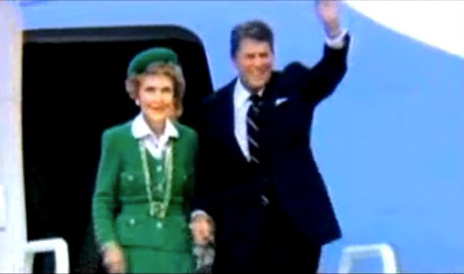
The film details some of the bands and history of the music, tying the appearance and disintegration of the scene to Ronald Reagan’s first term. One of the musicians interviewed talked about the crazy-fake back-to-the-1950s look that came out after Reagan was elected, and how the bands were reacting to that, saying that’s not us. An idea that maybe works better in retrospect.
There are interviews with various musicians: Henry Rollins (of course), some good talks with Ian MacKaye, and lots of others. One oddity was the interview with Mike Watt of the Minutemen. The Minutemen’s music didn’t fit the hardcore image, and the filmmakers didn’t try to make it fit, but also didn’t explain why they interviewed him. The band was on the same label as Black Flag, played the same clubs and such, so inclusion makes sense as a way of discussing the origins of the scene. A little more of a connection would have been useful. The Watt interview scenes in fact felt like outtakes from the excellent Minuteman documentary (We Jam Econo: The Story of the Minutemen).
More Notes On Writing, Again
Good article by C.A. Belmond in the Huffington Post last Wednesday: “Writers Wednesday: 5 Lies They Tell You About Writing.”
I particularly liked number 2: “Many writing instructors routinely discourage new authors from describing their characters and the world they inhabit. Why? Two reasons are usually given. One is that it isn’t “modern” to do so (Hemingway is often cited here); and the other is because it’s so darned hard to describe stuff (like sure, what are you, a writer or something?)…Perhaps that explains why so many writers use brand names in place of original description. Let’s call this for what it is: mere product placement, for which the authors didn’t even get paid.”
Aside from the vague statement “many writing instructors,” (how many? how surveyed? residential/non-residential programs? undergraduate/graduate?), I agree with what she’s saying. Brand names bore me. Brand names in fiction bore me. Including the name of a particular beverage doesn’t improve a story.
A critique of an early draft of Circus of the Grand Design by a writer I respect included the suggestion of using brand names in part one (which is set in the real world), to anchor the story because after part one it dives into the land of What the Fuck? and stays there till the end. The suggestion made sense, but I chose to ignore it; the final version did (I hope) convey the real-world better than the version he read.
“…do we really need to hear from yet another desperate housewife about her mind-numbing collection of Manolos and Choos, or the brand of bottled water she drinks?”
I learned from the comments to Belmond’s piece that she is referring to shoes. Maybe writers who use brand names etc. should have to pay licensing fees to the corporate owners.
Besides brand names, I don’t like to use pop culture references, contemporary jargon, sayings, and clichés. I find it jarring and uninteresting to read a story with, say, Facebook or YouTube in it. I’m even hesitant to use computers and cell phones in my fiction. I don’t need the world that I see every day to be reflected in fiction.
Grandiose it may be, but I would like the things I write to have meant something before current brand names, jargon, and fads existed. Yes, that’s unrealistic. English is always changing. There are words in common use now that originated from brand names or jargon. The main point would be that I’m not writing for the current moment.
But like any creative exercise, everyone is free to do what they want. If brand names get you exited, then pile them in. Fortunately for you, not all readers will have tastes as rigid as mine.
I’ll close with an example from Michael Cisco’s novel The Narrator, where you’ll find description that makes the familiar alien. No brand names here!
“Oh look another one of my outdoor cafés what about that. A handsome girl and brave asks me what I want and goes inside to get me whatever it is I’ve ordered. Everywhere, the same thing. I see mouths in motion on all sides. Incessantly in motion, on all sides. There’s another; and now two more have joined us. They eat, and their jaws work the food around among the teeth, between the jaws, pressed this way and that so that the different kinds of food find the teeth specialized to destroy them. The tongue does this, and also churns saliva into the food, so that everything tastes like saliva. Although the tongue naturally tastes, while having no taste of its own to speak of, not that I’d notice. I watch this or that patron lifting a cup or glass to the mouths they come here to honor with this fine food and drink, and the mouths stretch themselves out toward the cups or glasses, reaching out to meet them before the hand has finished bringing it near, as the eye judges. These people, like me, are marked for death. But not entirely like me. They can run.”
How to Write a Novel
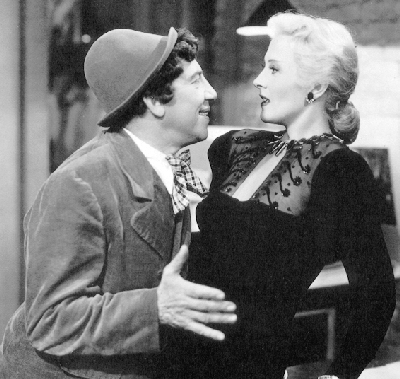 Chico Marx (Fiorello) from the Marx Brothers A Night at the Opera:
So now I tell you how we fly to America. The first time we started we got-a half way there when we run out a gasoline, and we gotta go back. Then I take-a twice as much gasoline. This time we’re just about to land, maybe three feet, when what do you think: we run out of gasoline again. And-a back-a we go again to get-a more gas. This time I take-a plenty gas. Well, we get-a half way over, when what do you think happens: we forgot-a the airplane. So, we gotta sit down and we talk it over. Then I get-a the great idea. We no take-a gasoline, we no take-a the airplane. We take steamship, and that friends, is how we fly across the ocean.
 Laconic Writer
