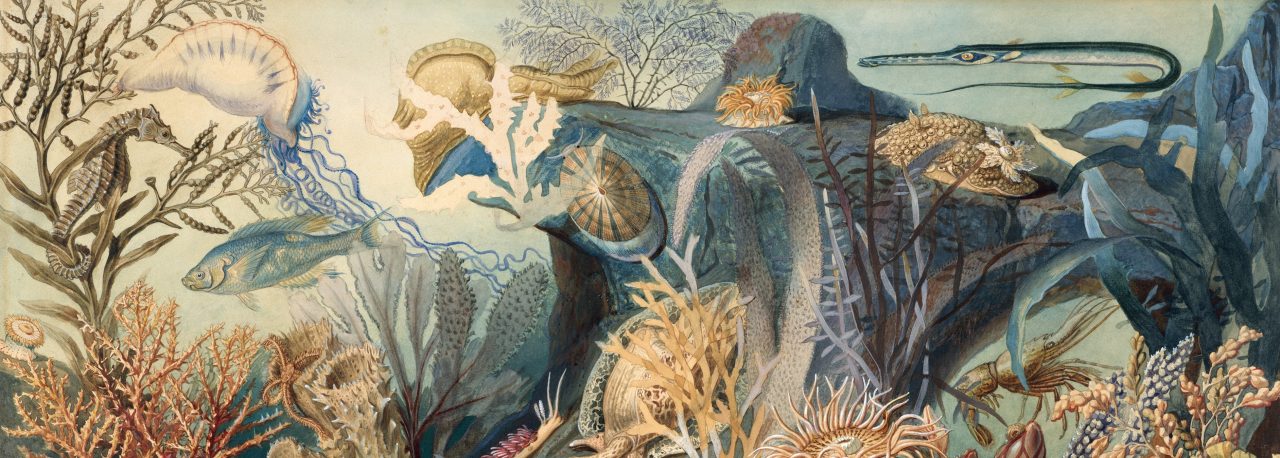
Up now at Book Spot Central. In which I talk about various things related to The Painting and the City.
Author: Robert Freeman Wexler
New P&C Review
Larry from OF Blog of the Fallen has posted a very positive review here.
Also, Brendan Connell recently finished an interview with me that will be posted at Fantasy Book Spot in the next few weeks.
Stark Folk Interview
 It’s time for another installment in the Laconic Writer Central (LWC) sporadic interview series, this time with Brady Burkett of the Stark Folk Band. Stark Folk’s second album Well Oiled came out this month, following the self-title debut from 2008. Both are available on cd and vinyl from Old3C Records and digitally on iTunes. The band is a collaboration between Burkett and Ryan Shaffer, plus other musicians to fill out the sound.
LWC: Let’s start with some history. When did you and Ryan start working together?
BB: Ryan is from the same hometown as I am. Brookville, Ohio. We vaguely knew each other, like people do in small towns, but we didn’t really connect until I was riding in the back seat of his black, tinted-window Z-24, talking about getting a band together as well as the debauchery we were looking forward to getting into that night. At the time I wasn’t even living in Columbus. I think Ryan was on break from his freshman year at Ohio State.
Also, I didn’t own a guitar or any other instrument. But, I knew I wanted to be in a band, make music, and create something, anything. I figured Ryan did too because he seemed really into the idea of creating art and all that. We were young and full of energy around it, so when I moved to Columbus during the late summer of ’96 it was on!
LWC: Stark Folk grew out these collaborations. What were the early incarnations like?
BB: Yeah, Stark Folk grew out of the A Landscape Yesterday project, starting from the first moment I picked up a guitar, learned a few chords, tried writing songs and recording. We had an actual four-piece band at one point, but it never really came together.
We got together in 2000–2001 to mix several tapes of recordings, the first one dating back actually to 1995 before I lived in Columbus. We used the fancy equipment in the basement of the Ohio Capital Building (Ryan had an internship there) to expedite the long process of getting the recordings CD-ready. They eventually became the A Landscape Yesterday: For Seasons 1996-2001 collection, which is available upon request. There are about 40 or so songs there.
There were also various other projects that we both were involved with from time to time in Columbus. Ryan once banged around in a band called The Dirty Tricks and I played animal drums in a wild upbeat three-piece called Liu Mang. All of it has informed where we are now, which for once really makes sense to me.
New Story
 I forgot to post that I finished a new piece last week, a 13,000 word novelette. It’s the first story I’ve finished in a long time. It still needs a title though.
The art comes from an article here about giant tree-size fungus from the Devonian. It’s “A rendering of Prototaxites as it may have looked during the early Devonian Period, approximately 400 million years ago. Painting by Mary Parrish, National Museum of Natural History.”
Giant fungus do appear in the story.
Painting and the City—French Cover
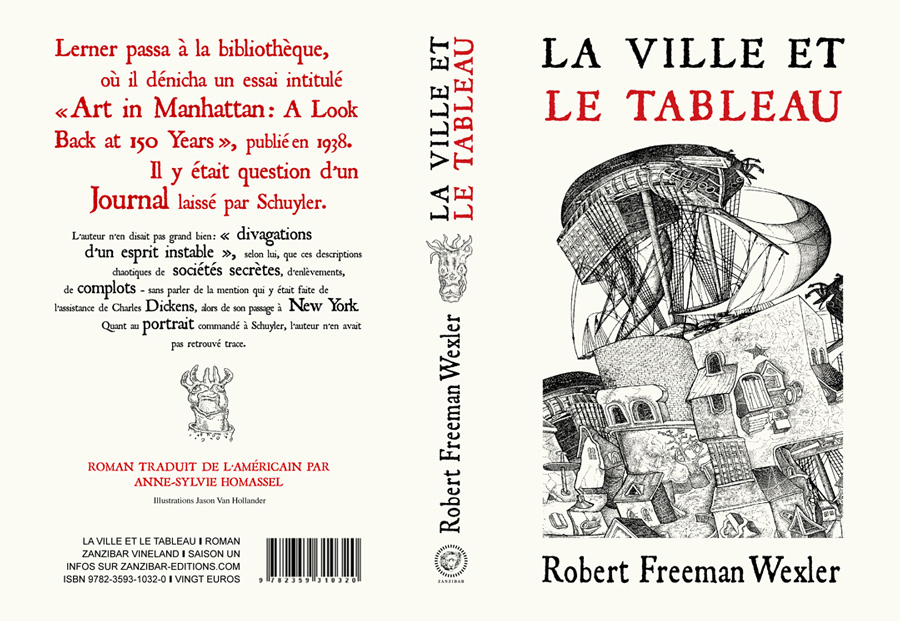 Here’s the cover for the French edition, which uses one of my favorite Jason Van Hollander’s Schuyler journal illustrations on the front.
Ford Introduction
Here’s the introduction that Jeff Ford wrote for The Painting and the City. Also, Jeff is blogging again. Go ye to the Crackpot Palace.
Jeffrey Ford: The Fiction of Robert Freeman Wexler
Like something out of a Robert Freeman Wexler novel, I can’t remember when I first met Robert Freeman Wexler. On the first few brief meetings, he was a very unassuming individual, calm, eyelids one eighth of the way toward a nap, but usually grinning. It was only after I read his fiction that his personality began to cohere for me. His fiction is deep and unique with its own off-kilter, waltz-like rhythm. It’s a tonic to the death-rush of today’s corporate-fueled five cuts per second novelty bazaar. It’s not screaming for attention by trying to be the most anything, but is content to be itself, which is something subtly surreal, contemplative, graceful, and shot through with humor.
A lot happens in his books, more than in most, because whereas many of today’s writers are always mindful of hurrying on to the next big payoff, Wexler is content to linger and give full weight to his characters’ musings and daily routines. They have jobs and relationships and know disappointment and an occasional quiet, solitary triumph. The clarity of his writing style reveals the everyday as being as interesting as an instance of, like in one of his short stories, the clouds taking on mass and tumbling out of the sky.
When these aspects of his fiction came into focus for me, Wexler, himself, came into focus. What I can tell you I’ve learned about him is that he’s in it for the art. That may sound like an outdated, hippie platitude, but for those, like him, who operate from this rare space, it’s a timeless actuality devoid of melodrama. He is not a frantic promoter of himself or his fiction. When he speaks about his work, you can tell he’s given it a great deal of thought. I suggest you seek out some of the interviews he’s given that exist on-line. There you’ll find someone intelligent and honest about the discussion of his own books, someone confident enough in what he’s about to be able to question his own motives and assumptions.
Booklist List
 Booklist, the magazine of the American Library Association, puts out an annual fantasy and science fiction issue. One of the features is an editor’s choice top ten, and they’ve put The Painting and the City on it. It’s an interesting list, spanning many types of things that fall under the label. Including Total Oblivion, More or Less, by writer-friend Alan DeNiro.
Lingua Fantastika
Matt Denault has a new reviews, etc. blog called Lingua Fantastika. He’s one of the best genre reviewers out there (self-serving example here) so I expect this site to have some good stuff.
Guardian article on fantasy
Lots of good stuff in this article from the Guardian by Damien G. Walter.
…And to judge by the narratives that have filtered down to us through oral traditions and early written records, fantasy has always been essential to those stories.
Stories from the ancient world are infused with the fantastic, from Ovid’s Metamorphoses to Beowulf, The Iliad and The Odyssey. Myth, legend, folk and fairytales have fired our imaginations for thousands of years. We have used the fantastic to take mundane reality and transform it, sometimes for escapist pleasure, and sometimes to find meaning in a world that can often seem brutal and purposeless.
and:
But the commodification of fantasy does not mean it must all appeal to the lowest common denominator, any more than the presence of Starbucks on every street corner means you can’t find a decent cup elsewhere.
Tim Robinson
I’ve only just found out that Tim Robinson, who did the illustration for the cover of Psychological Methods To Sell Should Be Destroyed, has a blog. Go there and see what he’s been up to.
 Laconic Writer