In the Land of Immediate and Shallow

It started when newscasters, instead of reporting the news, conversed it. Everything had to be reported live from the scene, even if it was a scene of nothing–the site of events that had occurred earlier, or the view of a street outside a window, etc. And in the studio, the heads had to speak to each other, to speculate, say things like: “Gee, Susan, how do you think her head felt when she went through the windshield?”…“Well, John, it appears that it did in fact hurt quite a lot.”

Now, you even hear this drivel on All Things Considered.

Nothing can be examined in depth.  News has to fit the ever-decreasing attention span. Reality TV is more important.

And reality TV is giving us our next political stars too. Because no one cares and no one accepts blame. People who don’t have jobs should just, you know, get one.


More Notes on Writing

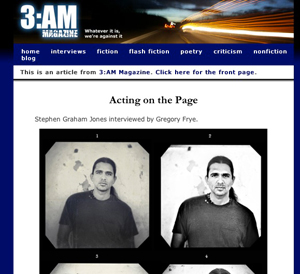
Yesterday I read an interview with Stephen Graham Jones, a writer who has been recommended to me, but I haven’t gotten to yet. He had an interesting observation about subverting genre:

“I’m always telling my students that the trick with exceeding expectations, it’s not to have, say, a hundred-foot tall robot zombie instead of a fifty-foot one, it’s to undercut the whole expectation of a robot zombie in the first place, make the reader think they’re not getting any undead cyborg at all, but then somehow do it anyway, through some side door only just now opening.”

He talks about doing this by keeping the reader so engaged with the characters that the plot elements, whatever they are, don’t matter. Which tends to be my thinking too. Mine isn’t the kind of writing style that is generally considered genre, but it has elements of genre (or elements of not-real).

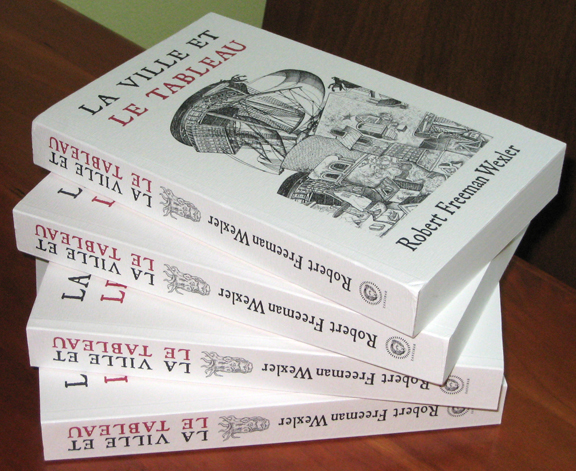
One of the organic farmers who brings produce to the Yellow Springs farmer’s market has been reading my books, starting with Psychological Methods To Sell Should Be Destroyed. He checked out The Painting And The City from the library, and liked it a lot. But he didn’t understand why it was shelved in science fiction. The novel isn’t realism, but the fantastic elements are presented in a realistic way, and they emanate from character and setting. He didn’t realize he was getting the metaphoric undead cyborg. He had no preconceptions, and the writing kept him in the story, wherever it went.

I know that the publishing industry needs its categories, but I’m tired of them, tired of being told that my writing doesn’t fit them. I still believe that people who read want to read good fiction and don’t care what the label is.

New books by some people

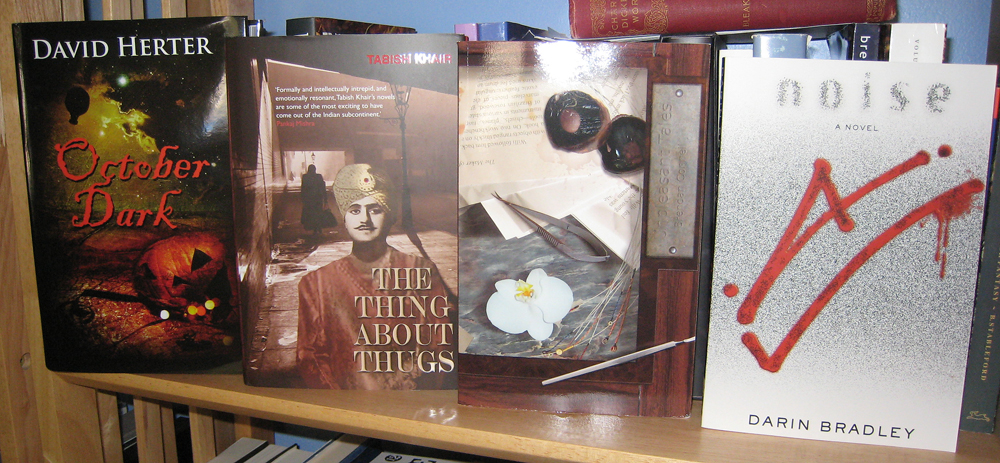
Here are four recent books by friends, some purchased, some traded for, a combination of presses small, large, and far away.

David Herter’s October Dark part of Earthling Publication’s Halloween series. From Library Journal:

“In OCTOBER DARK, so-called movie magic is real, the special effects masters are its practitioners, and it’s the only thing protecting the world from unspeakable evil. Filled with nostalgia triggers for baby boomers and Gen Xers alike, with an original story and the liberally dropped names of a pantheon of horror moviemakers, OCTOBER DARK is a delight.”

Tabish Khair, The Thing About ThugsHarper Collins-India. From India Times:

“Partly, perhaps, the world Khair creates seems so real because foggy Victorian London is so well entrenched in the imagination. However, much more is due to Khair’s own peculiar genius. He is a renowned poet, and like many poets before him, has a rare gift for prose. He can, in a few words, a brief alliterative phrase, conjure up a picture, inspire horror, pity, fear or love. He has also crafted a novel full of suspense where the various strands of mystery, human relationships and crime are expertly woven into one absorbing and fast-moving tale. This is a book that deserves to stand the test of time and join the other masterpieces of Victorian London.”

Brendan Connell, Unpleasant Tales, EibonVale Press. Blurb from Rhys Hughes:

“Every generation throws up a few genuine Masters of the Weird. There simply is no hyperbole in the statement that Brendan Connell is a member of this elite group right now, perhaps the most accomplished of them all. His work is very strange but always proceeds with rigorous logic and his use of language is original, concise and often startling, employing the alchemy of a ferocious intelligence to create dreamscapes that have the solidity and cruelty of stone and iron. The blend of profound melancholy, decadent atmosphere and abstruse erudition work beautifully and the magic of his prose gets under the skin of your soul and remains there forever.”

Darin Bradley, Noise, Bantam-Spectra. From the Bantam page:

“This haunting debut from a brilliant new voice is sure to be as captivating as it is controversial, a shocking look at the imminent collapse of American civilization—and what will succeed it.”

I’m looking forward to some reading…
On Robot Workers

In 1986 I got a job working from 5pm to 11pm as a proofreader for a company that typeset books for textbook publishers and university presses. In 2009, a French publisher offered to translate and publish The Painting and the City and Psychological Methods To Sell Should Be Destroyed.

What, you ask, is the connection?

Curiosity.

The typesetting company was a factory, typesetters, proofreaders, and paste-up artists* worked in a production line of very small cubicles.

*Paste-up artists were people who took the type (which was a form of developed film, on Kodak paper), and pasted it onto boards (also called mechanicals) that had been printed with page dimensions showing in non-reproducing blue.

Most people did their specific jobs without thinking much about how things worked in the rest of the company. Sometimes people were moved into other jobs, often because they weren’t doing their job well.

Continue reading “On Robot Workers”

Occasional Notes On Writing

Everyone who writes has their own reasons for doing it, their own way of doing it, their own justification for what and how they do it. What I think is crap and hack is produced by people who believe in what they’re doing.

Note: when I say “writing” I’m talking about writing fiction because that’s what I do.

I went to Clarion West a number of years ago. For anyone who doesn’t know, Clarion is a six-week intensive workshop for science fiction/fantasy/horror. A different writer comes in each week to teach. Participants try to write a new story each week to present to the group for critique. It was mostly a good experience for me. But at my Clarion there was pressure to write things that conformed to the tastes of editors at the big genre magazines, things that would sell to those editors. People who wrote traditional genre were more likely expected to succeed than those who didn’t.

That way of thinking interfered with my development. After the workshop it took me a while to understand what I wanted to do. I wanted to write things that came from me, that were uniquely me (and get them published). I can’t write for a market. I don’t want to write for a market. Theme anthologies?  Forget it.

Persevering with my own vision hasn’t been easy. Trends and fads come and go, writers pick up on them, get books published, etc. None of that is for me unless by accident.

New Springdale Novel


There are days to be endured, days to be celebrated, and the rest, the mundane many that shove us onward through time and space. Every morning I wake up and wonder which kind today will be. The key is to anticipate the unendurable. I’ve yet to manage that. But I survive. Most people do. The unendurable days pass like all the rest, even if they appear to take longer.

This is the beginning of chapter one of the novel I’ve been working on. It’s preceded by a prologue that I’ll post sometime. I first conceived it as another novella set in Springdale, first encountered in In Springdale Town. But after setting it aside to work on a story I decided it had enough to be a novel. Presently called New Springdale Novel.