New York, Emshwiller, Etc.

I’m back home after a short trip to New York for the Carol Emshwiller 90th birthday reading party event. Jim Freund, who runs the New York Review of Science Fiction reading series and hosts the Hour of the Wolf show on WBAI asked me to interview Carol as part of the event. Which sounded like a good idea at the time…

His plan was to start out the evening by reading a section from Ursula Le Guin’s introduction to the War side of Carol’s forthcoming PS collection, then have Carol read the beginning of a story, with Jim continuing it, and Carol reading the last section. Because of her eye problems, she didn’t think she could read all of it. At first, she didn’t think she could read anything. She was shaky at the start, but did great with the end.

After the reading, we went right into the interview. I’ve never done anything like that and I’m not sure I want to again. Part of the problem (aside from my inexperience) is that Carol and I spent about an hour and a half at her apartment talking about what we would talk about, and by interview time I felt like we had said everything. I wish we had recorded our conversation. So I asked a few questions, Carol talked, and long before I should have been finished, I had nothing else to say. Jim (the experienced radio host) took over, and audience members asked questions (which had been our plan, only not so soon). And it ended (as everything does). Unfortunately, it was videotaped, and recorded for radio. I don’t want to watch.

But still, it was a fun night. It was great to see all the support and admiration for Carol. For her life and writing—not just for making it to 90.
April is Emshwiller Month

I’m heading to New York next week for part one of the Carol Emshwiller birthday events.

Tuesday, April 12, The New York Review of Science Fiction Readings

The SoHo Gallery for Digital Art
138 Sullivan Street
Doors open at 6:30 PM
Program begins at 7:00
Admission Free
$7 donation suggested

There’s a second event the following Monday, but I’ll be back home.

Monday, April 18, the Wold Newton Reading Series will offer an interview of Carol Emshwiller by Matthew Cheney. There will also be magic Magic Brian.

Details: April 18, 2011, 7.30pm/WORD Bookstore in Greenpoint, Brooklyn/126 Franklin Street, Brooklyn, NY 11222

And, there’s a web compendium for information and Emshwiller tributes here.

More on Jack Hardy, and Journalistic Preconceptions

There was a nice piece at the New York Times online about some people getting together for a Monday night songwriter’s meeting/farewell to Jack.

The write-up had a link to a 1999 NYT article on the meetings.

I had forgotten about the article. It wasn’t a bad piece, but the reporter was stuck on the idea of having to give everyone’s age and occupation. I thought that was odd and unimportant. What was important was the reason for being there, art and song.

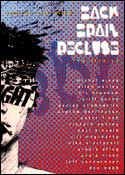
And, not that you can tell from the article, I was there. It happened to be the one time during that period when I tried to write a song. I wrote some lyrics and sent them to Mike Laureanno, who worked on them and came up with a melody. I also happened to have brought a copy of Back Brain Recluse, which had recently accepted my story, “Tales of the Golden Legend” (as I’ve said elsewhere, the story never came out in the magazine, but appeared later in The Third Alternative; the issue of Back Brain Recluse that I had there turned out to be the last). It was a funky magazine, with lots of art, and stories laid out in sometimes hard-to-read ways. Having the magazine, being a fiction writer at a songwriter’s meeting, illustrated Jack’s desire to include everyone, his love of interdisciplinary aesthetics.

But here’s what the reporter said: “Michael Laureanno, 38, an electrical engineer who drove nearly four hours from Wakefield, R.I., tried out a tune he co-wrote, via E-mail, with a friend from western Massachusetts.”

I’m not trying to be petty about my name being omitted. It’s the bad journalism that bothers me. I have a journalism degree so I know some things. What I think happened is that the reporter had already decided what the article was about, and my existence didn’t fit. The story would have been a better if he had written about what was there.

Somewhat connected bit. Here’s an excerpt from a Suzanne Vega documentary, showing one of the songwriter meetings in Jack’s apartment. Funny New York bit at the beginning–she’s riding in the back of a cab, looking at the camera and talking, the driver turns down the wrong street.

Jack Hardy, Gone

Jack Hardy and daughter Morgan, July 2006

Friday (March 11) for naptime, Merida, my three-year-old, wanted to listen to “Willie Goggin’s Hat” from Jack Hardy’s CD The Passing. As usual, she asked if he would sing it when he comes to visit. She also wanted him to do her other favorites, “Sile Na Cioch (Sheila),” “The Boney Bailiff,” “May Day,” “Blackberry Pie.” She says that about Ringo Starr and “Yellow Submarine” too, but with Jack it’s different. She’s seen the pictures of him at Rebecca and my wedding. She knows he’s been in our house.

Once she was asleep, I went to my computer. I looked at Facebook, which I hadn’t done in a couple of days. Someone had tagged Jack in a photo. I clicked on it, and was about to close the window when I saw that whoever had posted it had put dates, 1947-2011. I thought that was an odd way to date a photo. I looked at it again. Maybe it had Friday’s date—I can’t remember…I was starting to realize…I literally felt a clenching in my stomach. (This is one of the feelings that is difficult to convey in fiction without drifting into cliché.) But I felt it. I went to his Facebook page and saw the posts.

Continue reading “Jack Hardy, Gone”

More Notes on Writing

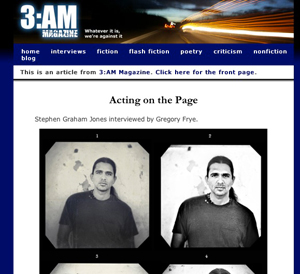
Yesterday I read an interview with Stephen Graham Jones, a writer who has been recommended to me, but I haven’t gotten to yet. He had an interesting observation about subverting genre:

“I’m always telling my students that the trick with exceeding expectations, it’s not to have, say, a hundred-foot tall robot zombie instead of a fifty-foot one, it’s to undercut the whole expectation of a robot zombie in the first place, make the reader think they’re not getting any undead cyborg at all, but then somehow do it anyway, through some side door only just now opening.”

He talks about doing this by keeping the reader so engaged with the characters that the plot elements, whatever they are, don’t matter. Which tends to be my thinking too. Mine isn’t the kind of writing style that is generally considered genre, but it has elements of genre (or elements of not-real).

One of the organic farmers who brings produce to the Yellow Springs farmer’s market has been reading my books, starting with Psychological Methods To Sell Should Be Destroyed. He checked out The Painting And The City from the library, and liked it a lot. But he didn’t understand why it was shelved in science fiction. The novel isn’t realism, but the fantastic elements are presented in a realistic way, and they emanate from character and setting. He didn’t realize he was getting the metaphoric undead cyborg. He had no preconceptions, and the writing kept him in the story, wherever it went.

I know that the publishing industry needs its categories, but I’m tired of them, tired of being told that my writing doesn’t fit them. I still believe that people who read want to read good fiction and don’t care what the label is.

New Springdale Novel


There are days to be endured, days to be celebrated, and the rest, the mundane many that shove us onward through time and space. Every morning I wake up and wonder which kind today will be. The key is to anticipate the unendurable. I’ve yet to manage that. But I survive. Most people do. The unendurable days pass like all the rest, even if they appear to take longer.

This is the beginning of chapter one of the novel I’ve been working on. It’s preceded by a prologue that I’ll post sometime. I first conceived it as another novella set in Springdale, first encountered in In Springdale Town. But after setting it aside to work on a story I decided it had enough to be a novel. Presently called New Springdale Novel.

New Story

I forgot to post that I finished a new piece last week, a 13,000 word novelette. It’s the first story I’ve finished in a long time. It still needs a title though.

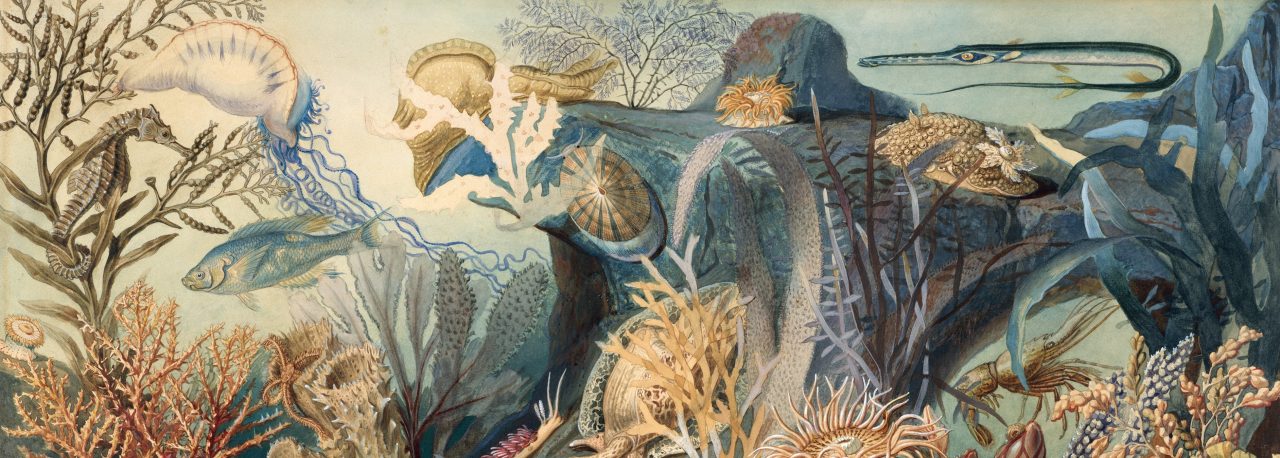
The art comes from an article here about giant tree-size fungus from the Devonian. It’s “A rendering of Prototaxites as it may have looked during the early Devonian Period, approximately 400 million years ago. Painting by Mary Parrish, National Museum of Natural History.”

Giant fungus do appear in the story.

Ford Introduction

Here’s the introduction that Jeff Ford wrote for The Painting and the City. Also, Jeff is blogging again. Go ye to the Crackpot Palace.

Jeffrey Ford: The Fiction of Robert Freeman Wexler

Like something out of a Robert Freeman Wexler novel, I can’t remember when I first met Robert Freeman Wexler. On the first few brief meetings, he was a very unassuming individual, calm, eyelids one eighth of the way toward a nap, but usually grinning. It was only after I read his fiction that his personality began to cohere for me. His fiction is deep and unique with its own off-kilter, waltz-like rhythm. It’s a tonic to the death-rush of today’s corporate-fueled five cuts per second novelty bazaar. It’s not screaming for attention by trying to be the most anything, but is content to be itself, which is something subtly surreal, contemplative, graceful, and shot through with humor.

A lot happens in his books, more than in most, because whereas many of today’s writers are always mindful of hurrying on to the next big payoff, Wexler is content to linger and give full weight to his characters’ musings and daily routines. They have jobs and relationships and know disappointment and an occasional quiet, solitary triumph. The clarity of his writing style reveals the everyday as being as interesting as an instance of, like in one of his short stories, the clouds taking on mass and tumbling out of the sky.

When these aspects of his fiction came into focus for me, Wexler, himself, came into focus. What I can tell you I’ve learned about him is that he’s in it for the art. That may sound like an outdated, hippie platitude, but for those, like him, who operate from this rare space, it’s a timeless actuality devoid of melodrama. He is not a frantic promoter of himself or his fiction. When he speaks about his work, you can tell he’s given it a great deal of thought. I suggest you seek out some of the interviews he’s given that exist on-line. There you’ll find someone intelligent and honest about the discussion of his own books, someone confident enough in what he’s about to be able to question his own motives and assumptions.

Continue reading “Ford Introduction”

Story Fragment

Here’s a piece of something I’ve been working on. Working title of “Mountain Story.”

Reports of the new mountain began to arrive late in the week, and were immediately discounted as fabrication or illusion, of the sort that often explodes into public consciousness and dominates conversation until another replaces it.  Last year, there was the story of a hidden community of log-dwellers in the municipal parklands, and others, many others.

Early the next week, a man came into the Ministry of Parks and Justice building, a man with mud-caked clothing and a gashed forehead, a man who claimed proof.  Park stewards brought him to the director’s office, and the rest of the staff assembled.

No resident of The Expanse has seen a mountain (several hills yes, and two shallow gorges).  The existence of mountains has been speculated, but not confirmed, in a land somewhere below the southern horizon.  No modern expedition has yet ventured far enough, though records exist, accounts from the great explorer-captains of many years past, from an age of enquiry.

Continue reading “Story Fragment”

Fountain Pens

In an older post I wrote about the deterioration of the pen department at Pearl Paint in Manhattan, and speculated on the whereabouts of the beloved “Pen Guy” who worked there. Yesterday another former Pearl Paint Pen Guy commented. Which got me thinking about my pens, and writing.

I used to write at the computer (and before computers, at the typewriter). I learned to do this in my first journalism class in college. A journalist is supposed to interview, make notes, and sit down to write the news story. I hope that’s still true. At some point I stopped writing at the keyboard. I don’t remember when, exactly. During the year I spent in Great Barrington, MA, I lived alone and worked free-lance from my apartment. I started going to cafes to write, partly to have social interaction.

Now I mostly I write in a notebook, away from the house. Later, I type what I wrote, print it out, and take it with my notebook the next time I write. I know people who write an entire draft longhand, then type, but I’ve never tried it.

I use a fountain pen, although I can also use other pens without my words falling apart.

Non-computer user Howard Waldrop has an occasional blog on the Small Beer Press web site. Here he talks about the fountain pens he uses.

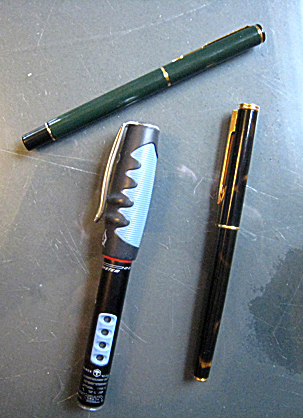
I have three fountain pens: Parker (top), Rotring—the fun one (left), and Waterman—the nice one (right). I rarely use the Waterman, which is a mistake because it wants to be used. It’s a nice pen, and I’m afraid of losing it if I take it out. I did lose my Parker but replaced it via eBay. I bought the original Parker from the Pen Guy for $10. It was a closeout that he thought I needed (and he was right). The last time I remember having it was at the Flight Path Cafe in Austin, a day after the 2006 World Fantasy Convention, and a day before meeting Howard for coffee.

A wine rep who sells to the Emporium in Yellow Springs is also a collector of vintage fountain pens. He is unimpressed by my modern pens, even the Waterman. I’m interested in the more finely-crafted vintage instruments and might like to own one some day, but I’m happy with what I have.